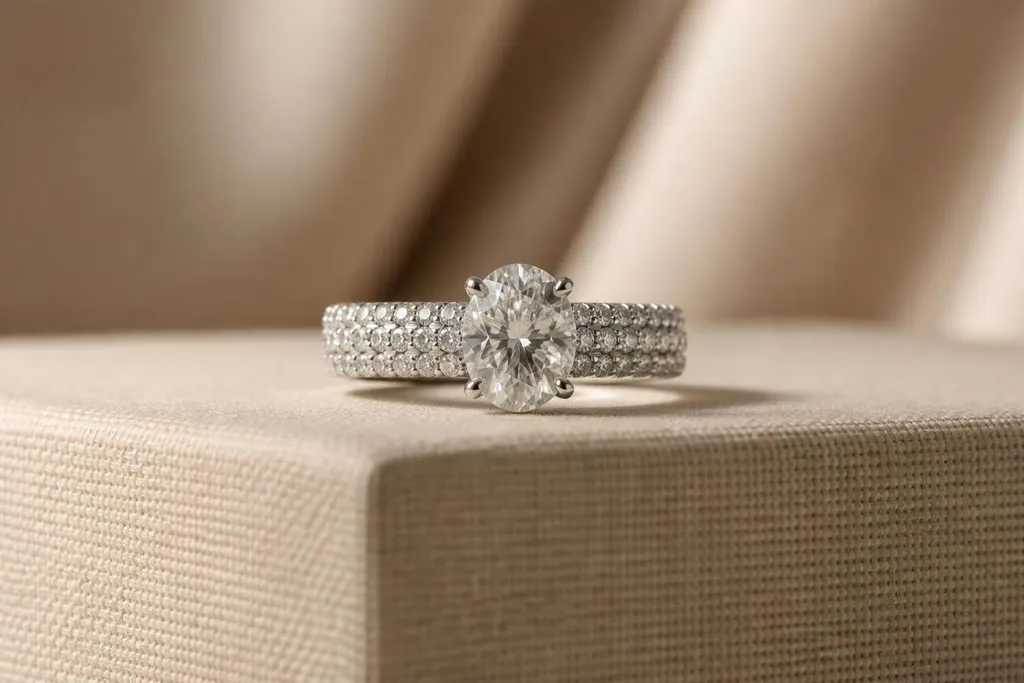
For some engagement ring styles, the band is designed to disappear quietly behind the centre stone. Triple-pavé takes the opposite approach. By setting multiple rows of small diamonds across the band, it turns the shoulders into an important part of the design, creating brilliance that continues well beyond the centre setting.
The effect can be striking, but successful triple-pavé design depends on control as much as sparkle. Looking at beautiful lab diamond triple pave rings illustrates how closely the centre diamond, pavé proportions and band construction need to work together. The aim is not simply to fit as many diamonds as possible onto the ring. It is to create a continuous surface of light while preserving a clear focal point.
What Makes Triple-Pavé Different?
Traditional pavé uses closely set small diamonds to cover part of the band with a fine line of brilliance. Triple-pavé expands this concept by incorporating multiple rows, increasing the amount of diamond visible across the shoulders.
Viewed from above, the band can appear exceptionally bright. Depending on its construction, additional diamonds may also be visible from slight side angles, giving the ring a more dimensional quality as the hand moves.
This makes triple-pavé particularly suited to someone who wants the engagement ring to have presence across the finger rather than concentrating all visual weight in one centre stone. It can also provide an alternative to a halo. Both styles increase overall sparkle, but they do so differently: a halo enlarges the visual outline around the centre, whereas triple-pavé draws brilliance outward along the band.
Balancing the Centre Diamond With the Band
With so much detail on the shoulders, the centre diamond needs enough visual definition to remain the focus. Shape and proportion become particularly important.
Round brilliant diamonds naturally complement pavé because both centre and smaller stones produce lively sparkle. Oval and pear-shaped lab diamonds introduce length, creating contrast against the wider horizontal line of the diamond-set band. Radiant and cushion cuts can deliver a fuller, more substantial appearance.
An emerald-cut centre stone offers a different approach. Its broader flashes of light can contrast elegantly with the finer scintillation of pavé diamonds, preventing the design from feeling visually uniform. Carat weight should also be considered as part of the complete composition. Someone might choose a 2-carat centre stone because its proportions hold their own against a highly detailed triple-pavé band. Another wearer may prefer a smaller centre diamond because they want the band itself to play a more prominent role. Neither decision is simply about size; it is about where the eye should naturally settle.
Why Pavé Craftsmanship Matters
Setting many small diamonds securely while keeping visible metal to a minimum requires precision. This is particularly relevant with triple-pavé, where several rows must appear consistent and balanced.
The diamonds should create an even visual surface without making the band feel unnecessarily bulky. The small beads or claws securing them also need to be neatly finished, both for appearance and for comfort during everyday wear.
Practicality deserves attention. Pavé-set rings contain more individual stones and setting points than plain-band designs, so sensible care is important. Avoiding unnecessary knocks and having the setting inspected periodically can help ensure the smaller diamonds remain secure.
Regular gentle cleaning is useful too. Pavé relies on numerous small facets reflecting light, and accumulated hand cream, soap or everyday residue can quickly soften its brightness.
Consider the Complete Bridal Look
A triple-pavé engagement ring already carries substantial detail, so the choice of wedding band can noticeably change the finished bridal set.
Pairing it with a plain polished band creates contrast and allows the engagement ring's diamond work to dominate. A pavé wedding ring, by comparison, can extend the brilliance across both rings for a more decorative result.
Metal selection also influences the character of the design. Platinum and white gold can create a cool, almost uninterrupted diamond appearance, while yellow or rose gold introduces warmer definition between the rows of stones and the surrounding structure.
The setting profile should be considered before choosing a wedding band as well, since some centre settings accommodate a straight band more closely than others.
Final Thought
Triple-pavé lab diamond rings are designed for those who want brilliance to extend beyond the centre stone. Their appeal lies in the interaction between numerous smaller diamonds, the band and a carefully selected centre diamond.
Maximum sparkle works best when it is deliberately structured. With balanced proportions, precise pavé work and a centre stone that remains visually distinct, a triple-pavé ring can feel richly detailed and luxurious without losing the elegance expected of an engagement ring.